Category: Spirit

  • Eye of the Storm

    Eye of the Storm

    After working with a client recently on his emotional stress reactions, he had an image of being at peace in the eye of a storm with a growing white protective bubble around him and the dark clouds receding farther and farther out. With time and practice, his intention is to make those dark clouds less dense so the space of peace expands farther and farther.

    This is a powerful image and one that came after entering the storm and discovering that by facing it with courage, presence and compassion, he was able to discover a peaceful center that was there all along. His mind and body were caught up in the whirl of the storm, however and he didn’t notice it.  The photo is taken from the eye of Hurricane Dorian. Amazing image!

    In the eye of the storm
    You remain in control
    And in the middle of the war
    You guard my soul
    You alone are the anchor
    When my sails are torn
    Your love surrounds me
    In the eye of the storm

    Lyrics by Ryan Stevenson

    Our nervous system was designed to handle occasional stressors with the fight or flight response; major threats with the freeze response. The rest of the time, our system is supposed to be in the “rest and digest or rest and repair” mode. This ensures the health of our whole system. Challenges are balanced with times of recovery.

    Lately, the challenges keep coming and we aren’t handling the stress so well with mental health issues on the rise. Our old ways of coping aren’t working or not possible.  The nervous system is calmed through supportive social connections which are not as easy to do safely now.

    So, how do we find that peaceful center?  It takes discipline and practice. Our minds are on high alert so it will be like taming a wild horse but start we must as we are in an era of great change and chaos.

    Find Your Peaceful Center:

    1. Make time to just sit with yourself and breathe.  Connecting to the breath brings the mind back in alignment with the body and spirit. The Latin term for breath is spiritus. Notice you are being breathed. Relax into that awareness of a force beyond your understanding that breathes you and keeps you alive.
    2. Connect with nature. Nature shows us that everything is in motion and change; flowers bud and then whither, fruit ripens and then turns to seed. We are part of it all and when we notice, there is beauty and joy and also the understanding that we are not in control!
    3. Connect with your loved ones, especially now when we can be outside. Be a source of support for someone with a calm voice and listening presence.
    4. Find something you are grateful for and savor it – the brain loves to stick to negative things. We have to pay attention and savor for the brain to shift to the positive.
    5. A recent survey found that 70% of participants described themselves as spiritual. Use that belief or inner knowing as a source of support now. Relax into your inner knowing of a higher power.
    6. Give yourself the gift of moments of silence. That’s where the healing happens, that’s when the insights come, that’s how Grace works its magic, subtly and sometimes dramatically letting us know All Will Be Well.


  • The Stress Hardy Personality

    The Stress Hardy Personality

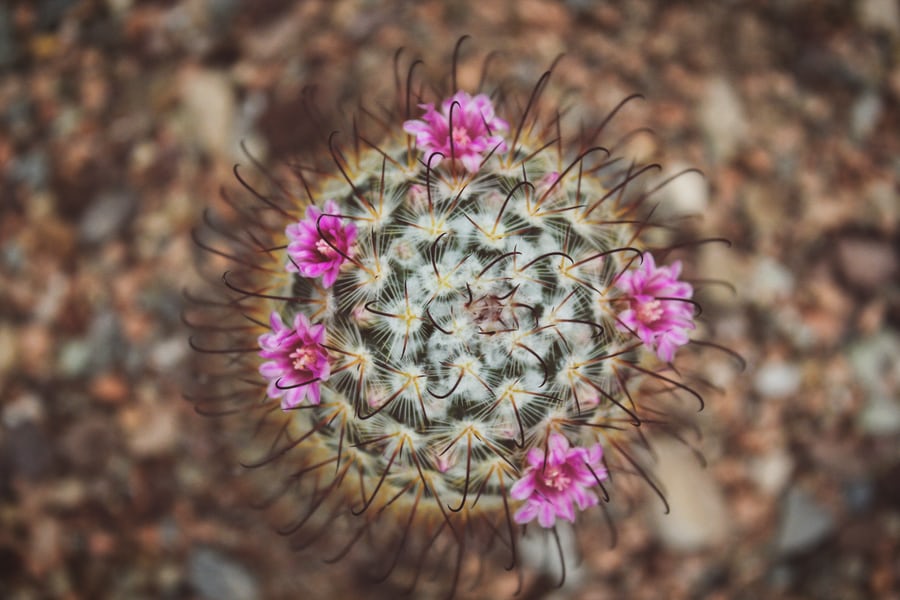
    Everyone I talk to these days is tired, distracted, and anxious. There is much uncertainty in our lives and much continued disruption. The definition of stress is: A response to any pressure or demand, requiring change or adaptation. Sound familiar? These are challenging times.   “Doom scrolling” is a new term for our times when you can’t stop scrolling through your news or social media feed and just can’t pull yourself away.  Well my dear friends, that isn’t helping!  I want to introduce to you today some old research from 1979 about the Stress Hardy Personality. Like the cactus in this photo, flowering despite inhospitable conditions.

    Life isn’t about waiting for the storm to pass…it’s about learning to dance in the rain.

    Dr. Susan Kobasa and Dr. Salvote Maddi did a ground breaking study in 1979 with  the executives of the Bell Telephone Company during a major restructuring of the organization.  They were curious about why some people seem impervious to stress and even thrive and others don’t.  What they found was that those with certain personality characteristics had 50% less stress related health issues. These hardy traits, known as the 3 C’s are:

    • Challenge:  Seeing stressors as opportunities for growth and change.
    • Control:  Having an internal locus of control, in other words, not being a victim to the external circumstances of your life.
    • Commitment:  To self, others or a mission. Your purpose protects you.

    They found about 30% of the population they studied had those traits naturally. We now know that these traits can be cultivated by practicing certain “stress hardy” skills.  The brain is changeable and we can learn to choose our thoughts and responses with practice and intention.

    Practicing stress reduction and mindfulness meditation will help you to develop these stress hardy skills:

    • Learn to pause and breathe before reacting.
    • Learn to observe your thoughts and not identify with them. You don’t have to believe your thoughts!
    • Practice daily self-compassion. What we are all going through is hard. Acknowledge that give yourself a break and some gratitude for all that is going right in your life.
    • Commit to a daily meditation practice. From a place of calm stillness, ask what’s possible now?

    For more inspiration and wisdom on this topic I highly recommend the beautiful and brilliant book, Man’s Search for Meaning by Holocaust survivor Victor Frankl.

    Everything can be taken from a man but one thing: the last of the human freedoms”to choose one’s attitude in any given set of circumstances, to choose one’s own way.

  • Welcome to the Hallway

    Welcome to the Hallway

    A few years ago, I heard a talk by Ellen Debenport, author of Hell in the Hallway, Light at the Door. Her book is a guide to times of transition, ultimately reminding us that even during these difficult times, we have choices and opportunities to claim something that is authentically ours.  We may not have had any control or choice in the events or situation that thrust us into the hallway, with a door shut behind us. But here we are, in the hallway and for many, it is being experienced as hell but others are thriving and finding their way through this difficult time, regardless of circumstances.

    Another word for this is liminal space, as Richard Rohr describes it, “when you are betwixt and between, having left one room or stage of life, but not yet entered the next.”  Both authors describe this time as full of potential, a time when the patterns of old ways of doing things and being are dramatically interrupted and suspended; plucking us out of the familiar and habitual. For now we are feeling like we are suspended in mid-air; not knowing where we will land, how we will land, or what our new reality will look like. My mentor, Kurt Hill teaches his students that you have to shake someone up in order for transformation or healing to occur.  Even Einstein said, The definition of insanity is doing the same thing over and over again and expecting different results.  One could argue that humanity then is insane, doing the same things over and over ignoring the growing crisis in our environment and growing disparities that are leading to more suffering and uncertainty. We find ourselves shaken up, suddenly a global WE, without solid ground to stand on and I propose it is the greatest opportunity to shift personally and globally we have ever had.

    We find ourselves shaken up, suddenly a global WE, without solid ground to stand on and I propose it is the greatest opportunity to shift personally and globally we have ever had.

    How do we shift and find that light in the doorway?  The photo I found featured above, taken by Hugues de Buyer-Mimeure, spoke to me as a clue to the process or more of an attitude or way of navigating this time. A young girl, immersed in an adventure, following the path of paw prints laid out ahead of her. The photo is full of wonder and there is joy and freedom in her movement like she is expecting to find something wonderful even though she is following the path of a large animal which could be perceived as scary!  When faced with our day to day reality and the news feed, it seems hard to see this as a time of adventure but perhaps we can make that choice. The following are some practices I have found helpful and perhaps will be helpful for you too. Let’s follow her lead!

    • Spending time to sit with myself in silence. Call it meditation, reflection, coming into the present moment or whatever you like. But it is essential for me now to be with and observe the feelings and thoughts and body sensations that are coming up. Just noticing:  where I’m holding tension, feelings of grief or sometimes joy that need to bubble up, what thoughts and beliefs are pulling me down the rabbit hole of fear.
    • In this time of reflection, allow memories to come up of times from your past when you were also in transition, crisis or an unknown time. I was surprised to make the connection between my underlying sense of unease to a time in childhood when my father was out of a job for 9 months, with 7 young children to feed! I remember wonderful times of fun and adventure with him but also remember the stress and uncertainty. Sitting with this memory and the energetic remnants of that little girl which is still active within, helped me approach my reactions with self-compassion. 
    • Don’t create stories about the past or future that aren’t true.  It’s easy to project fears into an unknown future, grasp onto stories that are circulating as to the reason this is happening but staying grounded in what is happening NOW, is crucial. I’m trying to stay curious as a way to suspend the mind’s need for explanation and future planning;  “isn’t that interesting…”
    • In order to open to creative possibilities, I’m asking myself, what’s possible now? I’m getting that I will need to move more of my content and practice online. (obviously!) Yes, many things are no longer possible, but what is?  Don’t ask this from a place of anxiety or fear, but rather, take time to calm your nervous system, and from a still place, ask your higher self, what’s open to me now? how can I help? what needs to be expressed? what’s my priority?

    When we are present and in a state of open-hearted allowing, we can open ourselves up to our divine potential and grace will swoop in to light up and open doorways we could not have imagined.  Go towards something that gives you an internal YES!, whether that is how you do your work, or how you can be of service or creating something new, or just cooking a wonderful meal for your family or listening to someone who needs an ear. It is how we approach this time that will determine what is there when we open that door at the end of the hallway. You choose.

  • Yes…And: Lessons from Improv

    Yes…And: Lessons from Improv

    [vc_row][vc_column][vc_column_text]Most New Year’s messages involve inspiration to start over, set goals, and kick those bad habits once and for all! We make vision boards, come up with affirmations, and lists of good intentions.  But so often these convictions lose their steam and we end up doing the same things over and over. These habits may offer short term pleasure but no lasting relief from the dissatisfaction that fuels the need for those habits. I’ve been reading a lot about addiction and trauma lately. Addiction expert Dr. Gabor Mate teaches that addiction is not a choice anybody makes. It’s a response to emotional pain. Addiction doesn’t have to be to alcohol or drugs, it can be to TV, your phone or social media, exercise, sugar, sex, or shopping. It’s those habits we want to get control over but find we are powerless against and for example, without awareness, we realize we just binge watched 2 hours of TV instead of going to bed early or reading that stack of books by our bedside.

    We are wired from the time we are born to seek pleasure and safety and avoid pain. Our nervous system becomes trained to seek those pathways that give some kind of reward. The majority of us experienced some kind of pain or trauma in childhood. No one’s parents were perfect and no one’s life experiences are without challenges. As kids we learn what helps us avoid or numb the pain or gain approval. These become subconscious programs that become part of our default or automatic reactions. For some of us, that involved eating something sweet, or escaping into the imagination or literally running away. As adults those pathways don’t go away, we just learn grown-up ways to keep them going “ alcohol, shopping, the internet, etc.  All the resolutions, affirmations, good intentions, and vision boards won’t do any good unless we actually face the pain or discomfort we are avoiding. It is through compassionate self-awareness we can finally be with the younger self that gets triggered unconsciously and provide the love and safety we are really seeking when we turn to those addictive distractions.

    Many spiritual teachers preach acceptance of the present moment as the way to end suffering.  Here’s an example from author and speaker Eckhart Tolle:[/vc_column_text][vc_empty_space height=”35″][mkdf_blockquote text=”Always say yes to the present moment. What could be more futile, more insane, than to create inner resistance to what already is? what could be more insane than to oppose life itself, which is now and always now? Surrender to what is. Say yes to life ” and see how life suddenly starts working for you rather than against you.”][vc_empty_space height=”20″][vc_column_text]Such promise! But such a challenge to our human selves who learned to say no to things that made us uncomfortable, feel unsafe or inflicted pain at a young age and yet, I have learned that is the key to unraveling those habits that keep us in patterns of suffering.

    I have a few friends who have recently taken improv classes and shared the basic improv concept of Yes, And. This concept is the key to creating successful funny scenes where actors cooperate with each other creating possibilities that would not be possible if one of them had said No.

    From Second City: The basic concept of these two words is that you are up for anything, and will go along with whatever gets thrown your way. Essentially, you don’t use the word No in improv very often! The And part comes in when you are in a scene and can add to what your partner started rather than detract from it.

    A large part of improv is that you are always there for your scene partner or partners, and, in turn, they are always there for you. This is the goal of Yes, And! By saying yes to your scene partner, you create something much more entertaining. If you start a scene by saying that you are an alien, and your scene partner completely commits to also being an alien, being abducted by an alien, etc., both of you know you can count on the other person. On the other hand, if you start by saying you are a puppy, but your scene partner says Wait, I thought you were a cat!, the scene is compromised. Not only do you feel less confident, but also the audience is less entertained.

    I started wondering if this could this be a way to understand and live this teaching of acceptance. If life is your scene partner, (and as Shakespeare so wisely observed, that we are all actors on a stage) might it respond differently when you have the attitude of “Yes, And”? What if life is giving you exactly the experiences that you need to learn what your triggers are thus revealing the aspects of you that need to seen, heard and healed? Instead of resisting, maybe with intention and awareness we can learn to say “Yes, And.”

    Dr. Dan Siegel wrote a parenting book entitled The Yes Brain. In a lecture he instructed his listeners to close their eyes and feel the reactions in the body and state of mind when you simply respond to the words Yes or No. Remarkably, with no other word attached, my body tightened up and my mood darkened with the word no, and became relaxed and optimistic with the word yes. When you say No to life, your body, mind and spirit shut down and you are not open to possibilities that are presenting for creative problem solving and potential lessons and gifts. When you say Yes, And, you stay relaxed, flexible, curious, resilient, and willing to try new things. You remain open to yourself and others allowing for creative solutions, empathy, and the opportunity for grace to move through you. Possibilities you could not have imagined open up as you say Yes, I accept this feeling, this situation; And, I choose to remain present, and  instead of reacting automatically, respond with wisdom and compassion. Yes, And is also a wonderful communication technique that opens up conversation allowing everyone to feel heard while at the same time, contributing something new.[/vc_column_text][vc_empty_space height=”42″][vc_single_image image=”5331″ img_size=”full”][vc_empty_space height=”28″][vc_column_text]In summary, the Yes, And approach involves the following steps:

    1. Pause before indulging in your favorite bad habit.  “Yes, I want to eat this whole pint of ice cream!”
    2. Bring your awareness into your heart, in other words, approach yourself with compassion, like you were relating to a 5 year old child.
    3. Notice what you hope to gain from the habit “ be honest about what you need. Some benefits include, pleasure, escape, stress relief, connection, etc. “Yes, I need comfort.” Most of these behaviors are fine in moderation as are the rewards – it’s when you lose power over your choices that they become destructive.
    4. Ask your self what you are avoiding. Observe feelings and thoughts coming up with neutrality.
    5. Say Yes to the feelings “ allow them to bubble up. Feelings are energy that if allowed, will move through you in just a few minutes. Don’t get pulled down the river and identify with the victim role, rather, stay anchored in compassionate awareness.
    6. Ask your higher self or Spirit to show you the root cause “ is there a memory that comes up for you? Perhaps you will get an insight about a false belief you are holding onto.
    7. Be with that aspect of your small self “ that inner child, and give him/her the love and compassion and encouragement you didn’t get in the past. Yes, this happened, And I have so much love and compassion for myself.
    8. Choose another option that is healthy and aligned with your goals or intentions. Yes, I need comfort, And I have a plan for what that other option is. Maybe that’s taking a bath, doing a guided meditation, talking with a friend, seeking out a hug, having a cup of tea with a favorite blanket, etc. Bring positive emotion to the enjoying of whatever it is – that will help the brain create new circuits you will want to repeat. Visualize yourself choosing this when you are in a relaxed state such as waking up and falling asleep when the brain’s slower wavelength help to shift your patterns.
    9. Seek outside help if this becomes overwhelming for you or need help in the process.

    This is a heart-centered approach that is a form of meditation “ you are meditating yourself from a higher perspective, allowing for healing. Enjoy the fruits of this practice as you will notice the compulsions, cravings and low level dissatisfaction with your life being replaced with joy, contentment and flow. Please contact me if you are interested in experiencing and learning more about this powerful practice.[/vc_column_text][vc_empty_space][/vc_column][/vc_row][vc_row][vc_column][mkdf_blockquote text=”What I love about now, is that it is always a beginning “ Byron Katie”][/vc_column][vc_column][/vc_column][/vc_row][vc_row][vc_column][/vc_column][/vc_row]

  • One Box At A Time

    One Box At A Time

    What exactly do you do? This is a question I frequently get and have a hard time summing up in an elevator pitch kind of way.  So I would reply with something that was easy:  I’m a health coach, or I help people with their stress or I work holistically with people on their health. None of those really captured what I offer. Admittedly, I was not comfortable talking about the spiritual aspect of health: fearing I would be judged for being a bit “out there” or “woo-woo”. Brene Brown says that “courage starts with letting ourselves be seen”. So, this new website is letting myself be seen! This is what I’ve been up to for several years; learning and delving into all these aspects of health and healing which are fascinating and powerful.   I am hoping this new website gives you a better understanding of what I have to offer and why I believe this approach is so important.[vc_row][vc_column][vc_empty_space][/vc_column][/vc_row][vc_row][vc_column][mkdf_blockquote text=”New elevator pitch “ I am a mind, body, spirit practitioner offering ways to bring all three into balance. Maybe still a bit enigmatic but perhaps getting closer!”][/vc_column][/vc_row][vc_row][vc_column][vc_empty_space][/vc_column][/vc_row][vc_row][vc_column][vc_column_text]

    Creating the new website, which is a better fit for my work, coincided with downsizing and moving into a home that is better suited to our current status as empty nesters. It involved getting very clear on what to keep and what to bring with us. What we were ready to let go of and what we were choosing to bring into the space that we live?  The process was difficult and at the same time joy-filled as each closet, box, and drawer became a memory box to sort through. Our new space is uncluttered, open, light filled.  It is peaceful and an easy place to live.

    My process working with people is similar.  What needs to go and what needs to come in for you to align with your highest potential; potential for health, peace, happiness.  We approached our household objects in categories:  clothes, books, furniture, artwork, photos, memorabilia, etc. Literally each object considered for usefulness, attachment (love or joy), and does it fit with our new desire to be free of stuff?  Slow at first as everything seemed precious but as time went on, it became pretty easy to toss the majority of our stuff in the sell, trash or recycle categories!

    Approaching your whole health is similar.  Using the categories of mind, body and spirit, we can consider what are in those boxes:

    • Mind:   What thoughts, beliefs, old patterns, old hurts, out-dated ways of viewing yourself are blocking your potential or creating stress?
    • Body:  What is the body trying to tell you through your current experience?  What kinds of lifestyle choices need to be added or let go of to care for your body? What stressors or old traumas need to be addressed and let go of?
    • Spirit:  What is your relationship with Spirit? What kind of concept of God or a higher power do you have and does that fit with your inner wisdom or experience or is it something you were handed to as a child? What kinds of approaches might allow you to open to actually experiencing yourself as Spirit, connected to your Source in everything you encounter?

    Nothing happens in isolation.  Everything is connected to everything! Like with my move, our attachments can be hard to let go of at first. But, shining a light in just one area will help to bring much into focus and balance which frees up energy. I think I needed to go through all my stuff and let go of a lot (not just the things) to gain some clarity in order to do the new website. I’m excited to share all that I have learned over the years as my journey kept me curious to keep learning“ how can I heal my own body? how can I find my center? And now lately “ how to live from the True Self?  It doesn’t happen all at once, but rather similar to moving from my big, old house, one box at a time.

    [/vc_column_text][/vc_column][/vc_row][vc_row][vc_column][/vc_column][/vc_row]