Category: Lifestyle

  • Welcome to the Hallway

    Welcome to the Hallway

    A few years ago, I heard a talk by Ellen Debenport, author of Hell in the Hallway, Light at the Door. Her book is a guide to times of transition, ultimately reminding us that even during these difficult times, we have choices and opportunities to claim something that is authentically ours.  We may not have had any control or choice in the events or situation that thrust us into the hallway, with a door shut behind us. But here we are, in the hallway and for many, it is being experienced as hell but others are thriving and finding their way through this difficult time, regardless of circumstances.

    Another word for this is liminal space, as Richard Rohr describes it, “when you are betwixt and between, having left one room or stage of life, but not yet entered the next.”  Both authors describe this time as full of potential, a time when the patterns of old ways of doing things and being are dramatically interrupted and suspended; plucking us out of the familiar and habitual. For now we are feeling like we are suspended in mid-air; not knowing where we will land, how we will land, or what our new reality will look like. My mentor, Kurt Hill teaches his students that you have to shake someone up in order for transformation or healing to occur.  Even Einstein said, The definition of insanity is doing the same thing over and over again and expecting different results.  One could argue that humanity then is insane, doing the same things over and over ignoring the growing crisis in our environment and growing disparities that are leading to more suffering and uncertainty. We find ourselves shaken up, suddenly a global WE, without solid ground to stand on and I propose it is the greatest opportunity to shift personally and globally we have ever had.

    We find ourselves shaken up, suddenly a global WE, without solid ground to stand on and I propose it is the greatest opportunity to shift personally and globally we have ever had.

    How do we shift and find that light in the doorway?  The photo I found featured above, taken by Hugues de Buyer-Mimeure, spoke to me as a clue to the process or more of an attitude or way of navigating this time. A young girl, immersed in an adventure, following the path of paw prints laid out ahead of her. The photo is full of wonder and there is joy and freedom in her movement like she is expecting to find something wonderful even though she is following the path of a large animal which could be perceived as scary!  When faced with our day to day reality and the news feed, it seems hard to see this as a time of adventure but perhaps we can make that choice. The following are some practices I have found helpful and perhaps will be helpful for you too. Let’s follow her lead!

    • Spending time to sit with myself in silence. Call it meditation, reflection, coming into the present moment or whatever you like. But it is essential for me now to be with and observe the feelings and thoughts and body sensations that are coming up. Just noticing:  where I’m holding tension, feelings of grief or sometimes joy that need to bubble up, what thoughts and beliefs are pulling me down the rabbit hole of fear.
    • In this time of reflection, allow memories to come up of times from your past when you were also in transition, crisis or an unknown time. I was surprised to make the connection between my underlying sense of unease to a time in childhood when my father was out of a job for 9 months, with 7 young children to feed! I remember wonderful times of fun and adventure with him but also remember the stress and uncertainty. Sitting with this memory and the energetic remnants of that little girl which is still active within, helped me approach my reactions with self-compassion. 
    • Don’t create stories about the past or future that aren’t true.  It’s easy to project fears into an unknown future, grasp onto stories that are circulating as to the reason this is happening but staying grounded in what is happening NOW, is crucial. I’m trying to stay curious as a way to suspend the mind’s need for explanation and future planning;  “isn’t that interesting…”
    • In order to open to creative possibilities, I’m asking myself, what’s possible now? I’m getting that I will need to move more of my content and practice online. (obviously!) Yes, many things are no longer possible, but what is?  Don’t ask this from a place of anxiety or fear, but rather, take time to calm your nervous system, and from a still place, ask your higher self, what’s open to me now? how can I help? what needs to be expressed? what’s my priority?

    When we are present and in a state of open-hearted allowing, we can open ourselves up to our divine potential and grace will swoop in to light up and open doorways we could not have imagined.  Go towards something that gives you an internal YES!, whether that is how you do your work, or how you can be of service or creating something new, or just cooking a wonderful meal for your family or listening to someone who needs an ear. It is how we approach this time that will determine what is there when we open that door at the end of the hallway. You choose.


  • One Box At A Time

    One Box At A Time

    What exactly do you do? This is a question I frequently get and have a hard time summing up in an elevator pitch kind of way.  So I would reply with something that was easy:  I’m a health coach, or I help people with their stress or I work holistically with people on their health. None of those really captured what I offer. Admittedly, I was not comfortable talking about the spiritual aspect of health: fearing I would be judged for being a bit “out there” or “woo-woo”. Brene Brown says that “courage starts with letting ourselves be seen”. So, this new website is letting myself be seen! This is what I’ve been up to for several years; learning and delving into all these aspects of health and healing which are fascinating and powerful.   I am hoping this new website gives you a better understanding of what I have to offer and why I believe this approach is so important.[vc_row][vc_column][vc_empty_space][/vc_column][/vc_row][vc_row][vc_column][mkdf_blockquote text=”New elevator pitch “ I am a mind, body, spirit practitioner offering ways to bring all three into balance. Maybe still a bit enigmatic but perhaps getting closer!”][/vc_column][/vc_row][vc_row][vc_column][vc_empty_space][/vc_column][/vc_row][vc_row][vc_column][vc_column_text]

    Creating the new website, which is a better fit for my work, coincided with downsizing and moving into a home that is better suited to our current status as empty nesters. It involved getting very clear on what to keep and what to bring with us. What we were ready to let go of and what we were choosing to bring into the space that we live?  The process was difficult and at the same time joy-filled as each closet, box, and drawer became a memory box to sort through. Our new space is uncluttered, open, light filled.  It is peaceful and an easy place to live.

    My process working with people is similar.  What needs to go and what needs to come in for you to align with your highest potential; potential for health, peace, happiness.  We approached our household objects in categories:  clothes, books, furniture, artwork, photos, memorabilia, etc. Literally each object considered for usefulness, attachment (love or joy), and does it fit with our new desire to be free of stuff?  Slow at first as everything seemed precious but as time went on, it became pretty easy to toss the majority of our stuff in the sell, trash or recycle categories!

    Approaching your whole health is similar.  Using the categories of mind, body and spirit, we can consider what are in those boxes:

    • Mind:   What thoughts, beliefs, old patterns, old hurts, out-dated ways of viewing yourself are blocking your potential or creating stress?
    • Body:  What is the body trying to tell you through your current experience?  What kinds of lifestyle choices need to be added or let go of to care for your body? What stressors or old traumas need to be addressed and let go of?
    • Spirit:  What is your relationship with Spirit? What kind of concept of God or a higher power do you have and does that fit with your inner wisdom or experience or is it something you were handed to as a child? What kinds of approaches might allow you to open to actually experiencing yourself as Spirit, connected to your Source in everything you encounter?

    Nothing happens in isolation.  Everything is connected to everything! Like with my move, our attachments can be hard to let go of at first. But, shining a light in just one area will help to bring much into focus and balance which frees up energy. I think I needed to go through all my stuff and let go of a lot (not just the things) to gain some clarity in order to do the new website. I’m excited to share all that I have learned over the years as my journey kept me curious to keep learning“ how can I heal my own body? how can I find my center? And now lately “ how to live from the True Self?  It doesn’t happen all at once, but rather similar to moving from my big, old house, one box at a time.

    [/vc_column_text][/vc_column][/vc_row][vc_row][vc_column][/vc_column][/vc_row]

  • Breast CA: Choices that Minimize Risk and Maximize Health

    Breast CA: Choices that Minimize Risk and Maximize Health

    A Whole Person Health model is helpful to use to guide your decisions that will maximize your health and wellness. Whole Health© uses 5 aspects to address the whole person as mind, body and spirit are interconnected and function as one. The 5 aspects include Physical, Emotional, Nutrition, Environment, and Spiritual. By understanding how these 5 aspects impact your health, well-being, purpose, happiness and longevity, you can choose the best sustainable health behaviors and lifestyle choices.This essay will give a brief overview of the 5 aspects as related to breast cancer prevention and recovery.

    Physical: This aspect includes the body and all the systems. The hormonal and immune systems are relevant to recovery and prevention. The immune system is all throughout the body including the digestive track. Any kind of physical or emotional stress compromises the immune system and thus, your body’s ability to fight cancer cells. Be sure to get adequate sleep (7-8hrs), have a daily practice of ridding the body/mind of emotional stressors and make sure to get adequate protein, cholesterol, B vitamins, and vitamins D, E and A as according to the grandfather of stress, Hans Selye, these nutrients are depleted during stress.

    Nutrition: Eating a whole foods diet that emphasizes fruits and vegetables from all the colors of the rainbow maximizes the cancer fighting nutrients in plants. Avoiding sugar and refined carbohydrates is important as research studies dating back to 2004 and as recently as 2014, found that foods with a high glycemic index accelerate the growth of breast tumors and cancerous cells in the body. One study found that breast cancer risk doubles with high carb intake. Avoid over processed and cooked foods that don’t give our cells the information and nutrients it needs.

    Environmental: Avoiding estrogen mimics that could raise estrogen levels is important. Avoid BPA in plastics, canned foods and receipts. Limit or cut caffeine and alcohol, which can raise estrogen. Eat less red meat and dairy from conventionally raised animals. Eating more fiber helps to rid the body of excess estrogen.

    Emotional: Emotions that are not expressed and stored in the body can limit the body’s ability to heal and/or maintain health. Feel your feelings, and then allow them to be heard, and watch as they slowly release. Be gentle on yourself and focus on self-care and self-love. If you have been diagnosed or are recovering and are local to the Chicago area, The Licorice Project is a wonderful resource of information and support. http://www.thelicoriceproject.com

    Spiritual: A cancer diagnosis or risk brings up thoughts on the essential questions in life: Why am I here? Where will I go when I am gone? Perhaps you are reevaluating how you want to spend your time. Living your truth is essential for recovery and prevention. What are you passionate about? What do you need to let go of? It is also important if you are diagnosed and faced with a myriad of decisions to use this process as a way to get in touch with your needs and wants and not get persuaded into treatments that are based on fear or what everyone else is doing. Prioritize this aspect as it lays the foundation of your health.

    Please contact me if you are interested in more information or guidance on how to integrate these ideas into your life.* â„¢©Whole Health Education and Coaching is a Trademark of the National Institute of Whole Health * â„¢© The five aspects of Whole Health is a copyright and trademark of the National Institute of Whole Health.

  • Is Healing Autoimmune Disease Possible?

    Is Healing Autoimmune Disease Possible?

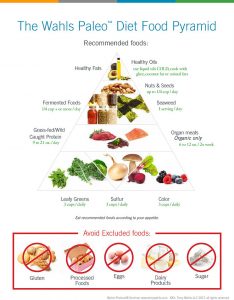
    A few weeks ago I was able to thank a personal hero of mine in person and share a meal at Kitchfix in Chicago with many other inspiring people who have also used lifestyle changes to heal themselves. Dr. Terri Wahls is a clinical professor of medicine at the University of Iowa where she teaches residents and sees patients in a traumatic brain injury clinic and conducts clinical trials. She is also a patient with progressive multiple sclerosis who was confined to a tilt-recline wheelchair for four years. She was compelled to discover answers for what was causing her disability. Her research led her to discover the Wahls Protocol, which she developed and tested on herself. She is riding her bike to work now as the first person to reverse the symptoms and disability of this disease. She shared her research with us and we were astounded to see videos of people able to walk unassisted, even jumping!

    About 6 years ago, she wrote an essay published in the Journal of the American Medical Association that described the protocol and her recovery. At the time I was experiencing symptoms and heading to a likely diagnosis of my 3rd autoimmune disease, Sjogren’s Syndrome. Conventional doctors had no answers for me beyond treating symptoms, which were related to the drying of all the mucous membranes of my body. I was extremely motivated to find something that would halt this. My husband who is a physician shared the article and suggested doing whatever she did. That began my deep dive into healing myself. It began with intensive nutrition, which included an elimination diet to discover what foods were harming by body and what foods would heal my body. The Wahls Protocol also includes stress reduction and meditation, and neuromuscular stimulation specific to MS. (which I did not do) I went further and discovered many limiting beliefs, old emotions, toxic thought patterns and a disconnect with my core Self that created the patterns that led to the dis-ease in the first place. This process takes time and attention and I am happy to report that I am fully recovered with no signs of Sjogren’s and am continuing to decrease medication for Hashimoto’s Thyroiditis, which means my thyroid gland is continuing to recover function.

    Over a delicious multiple course gourmet Wahls-approved meal prepared by the chef at Kitchfix, we heard many other stories of recovery but most importantly everyone who is using this approach repeatedly talked about quality of life improvements. They felt better, they were more relaxed, they were hopeful and happier. Any change in lifestyle takes work, discipline and practice but the rewards are astounding. Over the years of working with people who have a range of physical, mental and emotional symptoms, I have witnessed remarkable recoveries and shifts by aligning the body, mind and spirit to its true nature. What do you need to get rid of to heal and what do you need more of to not only heal but also recover your vitality and love of life? So, the answer is YES, healing autoimmune disease and many other illnesses are not only possible, but may be your road to rediscovering yourself in a whole new light. Resources: Dr. Terry Wahls: https://terrywahls.comKitchfix: Delicious healthy prepared foods delivered: https://www.kitchfix.comEmail me at ann@annpetrusbaker.com to schedule a free 20 minute consult to today!

  • The Toxic Pursuit of Self-Esteem

    The Toxic Pursuit of Self-Esteem

    My kids are part of the trophy generation, where teachers and parents, armed with good intentions, showered kids with affirmations, accolades, prizes and yes, trophies. Thinking that this would boost self-esteem, it was going to be the panacea in mental health. High self-esteem equals less anxiety and depression, right? Hmmm, something doesn’t add up as we are seeing increased rates of teen anxiety, depression and suicide. (Photo credit:  Georgio Trovato)

    The self-esteem movement combined with our American culture promotes a way of feeling good about ourselves through achievement, feeling special or at least above average. Think of getting a report card when they tried to do away with letter grades and gave kids a Satisfactory or meeting expectations. There was an outcry “ surely my child is above average!! We are used to scale ratings, grades from A “ F. We learn from a very early age this is how we determine our value so we feel very disoriented when we don’t have that rating scale. Children absorb the message: perform, get a perfect ACT, be on the most competitive sports team, and if you are in the arts, then get the lead, the first violin chair, and on and on. Getting into the best college has become such a source of stress for high school students, many are turning to alcohol and marijuana to cope. When do we, children and adults have room to just be?

    Self-esteem researchers call this the Lake Wobegon effect, where all men are good looking and women are strong and children are above average. This need for self-esteem leads to blind spots depending on the culturally valued trait. These blind spots then lead to suppressed traits called the shadow by Carl Jung. When researchers asked Americans to rate themselves on their driving skills, they found 98% drivers think they are better than average. That can’t be true! In Japan, most people think they are more humble than average. We subtly find ways to be blind about who we are and not see others completely for who they are. Our culture is currently facing a narcissism epidemic; researchers have been tracking this for 25 years, and levels are now at the highest ever recorded. The Me Generation are kids told they were #1 and special so they formed self-images based on being better than everyone else. This leads to social comparison, which naturally leads to judgment and meanness; who is prettiest, smartest, etc. When my daughter was in middle school, girls actually rated other girls as they walked down the hallway. Popular girls are popular because they manage to control the rating system. Social media has become the ultimate tool in comparison with studiesshowing increased feeling of anxiety and depression correlating with time on social media. Bullying and prejudice both have deep roots in the need to feel better. I am better or my tribe (race, religion, political party) is better than yours. The ego then needs constant feeding and bolstering in order to survive. We feel deep down as if our very existence depends on self-esteem. Deflecting blame or responsibility is part of the protective bubble of high self-esteem.

    Coupled with all of this is the feeling of disconnect and feeling separate. With all the competing and comparing we are doing, it is no wonder we feel isolated even when using the internet leads us to believe we are more connected than ever.

    So, what to do about this? Teach yourself and your children self-compassion. Self-compassion is extending compassion to one’s self in instances of perceived inadequacy, failure, or general suffering. Expert Kristin Neff, PhD has defined self-compassion as being composed of three main components “ self-kindness, common humanity, and mindfulness. It is a healthy, non-judgmental way to feel good about yourself with no need for you to be anything other than just how you are. Please read Part 1 and Part 2 for more information. Self-compassion is love based, not ego based. We are all imperfect human beings who have the ability to bring unique gifts, talents, and passions to the community thus strengthening and uplifting the whole. We naturally feel more connected when we feel good enough about ourselves and there is no need to push others away. Self-compassion research shows that how kindly you relate to yourself was associated with being less angry, a stable sense of self-worth and no association with narcissism. We need to embrace the full range of human experience, the light and the dark, the supposed failures and successes, learn from it all and accept the inevitability of life living through you as you are.

    A short exercise: See Yourself as You Are:

    Choose traits that are valued for which you are average, above average and below average. Write them down as a list. See the full range. Can you see and sit with and allow those traits that are below average? Can you embrace those traits that are your strengths? Are there traits that you haven’t developed because they are not the cultural norm? Do you feel the relaxation in this?It is our common humanity that will unite us. When you open your heart to yourself, you will in kind open your heart to others. Be the change you wish to see in the world. As we love ourselves and children for simply being, we can change the world.

  • Self-Compassion: Why Don’t We Do It?

    Self-Compassion: Why Don’t We Do It?

    Allow

    by Dana Faulds

    There is no controlling life.

    Try corralling a lightning bolt, containing a tornado.

    Dam a stream and it will create a new channel.

    Resist, and the tide will sweep you off your feet.

    Allow, and grace will carry you to higher ground.

    The only safety lies in letting it all in

    the wild and the weak; fear, fantasies, failures and success.

    When loss rips off the doors of the heart,

    or sadness veils your vision with despair,

    practice becomes simply bearing the truth.

    In the choice to let go of your known way of being,

    the whole world is revealed to your new eyes.

    According to self-compassion expert, Kristen Neff, PhD, over 100 studies have been done showing the benefits of self-compassion.

    Self compassion leads to:

    • Emotional Resiliency: less anxiety, stress, depression, perfectionism, and greater coping skills.
    • Increased Positive States: more optimism, life satisfaction, creativity, self-confidence, joy and happiness.
    • More Motivation: more likely to pick themselves up and try again and keep on trying. Self-compassionate people are less risk-averse and more likely to learn and grow from mistakes. They set high standards but don’t beat themselves up when they don’t make the mark.
    • Improved Health Behaviors: Self-compassionate people exercise more, quit smoking, practice safe sex, go to the doctor, and are more able to cope with chronic pain.

    With all these benefits why isn’t self-compassion more prevalent?

    • We think being kind to ourselves is being weak. Americans value strength! But think of the power behind leaders such as Martin Luther King, Nelson Mandela and Ghandi. Each of their missions were based in compassion.
    • We confuse self-compassion with self-pity. However, self-compassion does not enhance the victim story as a pity party does, rather it acknowledges our shared humanity.
    • We wonder if we are letting ourselves off the hook. It is important to take responsibility for our actions; own up to when we have let others and ourselves down. However, harsh self-criticism clouds our perception of ourselves and may lead to underperformance and a fear of trying something new or different.
    • The biggest block is that we believe we need harsh criticism to motivate ourselves.

    Self-criticism had a role in our evolution to keep us safe. When we make a mistake or experience rejection, we feel threatened and go into a fight, flight, or freeze response. Our imperfect self is seen as a threat to our existence so we respond harshly out of fear. Be honest “ we wouldn’t talk to a friend or child the way we talk to or about ourselves. We also internalize parental and societal voices that tend to favor the boot-camp mentality; no pain/ no gain, discipline, perfection, and competition. I think back to my son’s first competitive sports experience in the 4th grade. His coach screamed expletives, calling them sissies and worse. It broke my heart as I watched him develop a fear of failure and a loss of joy in playing basketball. He has overcome both but that coach’s voice I fear is in all of our heads. By contrast, my daughter’s kindergarten teacher’s response when someone made a mistake was: “Yay! You are human!” This approach is what the research supports. When we acknowledge our natural human shortcomings, our painful situations and feelings with love and compassion, the nervous system relaxes and we feel safe to keep trying or learn to try something different that may lead to even more fulfillment and satisfaction.

    Here’s a short self-compassion practice to try (as often as necessary:). To calm the nervous system and give your bodymind a good dose of feel good neurochemicals try placing your hands on your heart or doing a self-hug with hands on opposite shoulders and take deep belly breaths.

    1. Bring mindfulness to the fact you are suffering. Say to yourself, “this is really hard right now, I’m struggling.” Validate your feelings by gently labeling them – sadness, fear, shame, etc.
    2. Remind yourself of the common humanity of struggle. Say to yourself, “this is part of life, this is normal, I’m not alone.” Don’t believe the story of “why do I have it so hard” or “why am I the only one who does this?”
    3. Bring words of kindness to yourself. Say “I’m sorry this is so hard for you, I care, what can I do to help?” Use a warm tone and words. Allow yourself to feel able to cope.
    4. Transform any moment of suffering by allowing it, not fighting against it. This is the alchemy of the heart.

    More research and exercises at www.selfcompassion.org

  • Radical Self-Care, Another To-Do Item?

    Radical Self-Care, Another To-Do Item?

    I’ve been hearing the phrase “Radical Self-Care” recently among friends and in the media. As a professional promoter of self-care, I’ve been curious about this. Why radical? Do we need such a dramatic word to allow ourselves to care for ourselves? Is this a reflection of our culture where “simple self-care” just wouldn’t be attention-grabbing enough so we need a boot camp for it!? (yes, I did see this promotion!) It seems to be a current buzz word among wellness experts promoting everything from juice cleanses, to fitness regimens, taking a bath, or indulging in expensive spa treatments or chocolate or wine with girlfriends. (Many of these wellness blogs just happen to be selling products to help you in your self care.) I saw one post that had 25 recommendations for radical self-care that included: not rushing, remembering to breathe, but stimulate your brain with an interesting podcast on your commute drinking your non-caffeinated beverage and vegetable smoothie. Smell the perfect essential oil to lift your mood while figuring out how you are going to get everything done and squeeze in 30 minutes at the gym, cook a healthy meal, find time to meditate and drop into bed at 10pm for the perfect sleep. Exhausted yet from all your self-care? Has radical self-care become yet another thing on your to-do list and yet another thing to feel you are failing at?

    I had an epiphany this summer that woke me up to the self-improvement project I have been on for most of my life. My health crisis of a few years ago just made me more resolved to find that perfect diet, supplement, yoga routine, etc. And then a mentor told me in order to find true peace and my true self, I needed to drop the self-improvement project. What?? I didn’t even know I had one!! Wow – truth feels like a punch in the gut and I definitely got punched in the gut. After sitting with this I owned up to the fact that my quest for wellness was, in addition to actually feeling better, also based on a general feeling of inadequacy, of not being_______enough (fill in the word – healthy, smart, thin, wise, creative, etc…..) So there I sat facing all those feelings I had been covering up with my quest for “self-care”. At that moment, I began the sometimes difficult process of relaxing into accepting myself where I am right now and basing my actions for self-care on a true love for myself. This approach is based on mindfulness and honesty. This might mean taking a nap instead of working out or watching a re-run of the Office and laughing with my son instead of meditating. On the other hand, it could also mean shutting off social media or the news and cooking the healthy meal I know I need. It means being in touch with yourself in the moment and listening, feeling and responding like a nurturing mother to a child. Sometimes a hug is in order and sometimes what’s best for the child isn’t that extra cookie he/she is crying for but a nap or a well-balanced meal.

    In summary, I propose something even more radical than Radical Self-Care! It is revolutionary and it is self-acceptance and self-compassion. There are over 100 scientific studies showing the benefits of self-compassion. Self-compassion is treating yourself with the same love and care you would for a child, a friend, or a family member. Why exclude ourselves from this circle of love? But when I bring up the topic of a lack of self-love people groan, roll their eyes, ugh, they say, I can’t do that! But we can, it is a learned skill and one we already know – we just need to turn what you naturally give to others back on to yourself. I commit to exploring this further in a series.

    For starters, here is a simple practice I use with my clients:

    1. Take a few minutes to get quiet, slow your breathing and intend to find the silence underneath all the mental chatter.
    2. To help, place your hands on your heart and breathe in and out of your heart – inhale to count of 4, exhale to a count of 6. This helps to turn on the relaxing nervous system and link our heart and brain.
    3. Just notice what is there – what feeling is there? Scan your physical, mental, emotional, spiritual selves.
    4. Ask – what do I need in this moment? You may be surprised by the answer.
  • A Silent Retreat, aka “Momcation”

    A Silent Retreat, aka “Momcation”

    I love my children who are really adults now and am thrilled to have them home this summer with one already out of the nest. However, my previously quiet house is now filled with the background noise of the Netflix series du jour, friends coming and going, a constantly dirty kitchen, never enough food in the frig, (Mom, there’s nothing to eat!) and the evidence every morning of late night snacks (which is why there’s nothing to eat!) I go for a walk in the neighborhood and am surrounded by loud mowers and blowers, or construction saws. And then there’s the news! Urgent action alerts multiple times a day as our country’s health care, environmental protections, education, and women’s health are under review for change.

    One evening as I was doing dishes, I heard a whisper “ go to the beach, alone and do it soon. Actually, it was more of a command from my higher self than a gentle whisper. I found myself completely on board with this idea “ I had to make it happen!

    Here’s what I learned:

    • I don’t like to inconvenience others or ask for anything for myself. I did it anyway. Step #1 was to both ask a friend to stay at her beach house and then inform my family they were on their own for 3 days.
    • Three days of quiet time by a beach felt like just a warm-up “ could have used a whole week.
    • Time alone once every 15 years or so is not enough!
    • I was happier and lighter not checking the news or social media.
    • As I started to unwind, I found I moved slower and was actually more tired than I allow myself to be on a daily basis. I napped daily which I swore I couldn’t do.
    • I spent every moment possible outside (I love screened in porches!). Nature is a salve, a balm, a healer.
    • I definitely do too much for those who are capable of doing things for themselves.
    • I could meditate for an hour a few times/day. Each meditation brought me deeper into a quiet I haven’t heard before and a feeling of a loving Presence that came from within.

    We love time with our families and friends but time alone is essential to recharge, reset your nervous system, reconnect with your self, reclaim your sanity and your soul. I am blessed that I had the opportunity to have the experience I had. Even if you can’t get away, try to carve some time out in your schedule such as on a weekend morning. My sister-in-law woke up at 5 am when her kids were home for her me-time. Maybe you live alone but fill your silence with distractions. Really look at how you are spending your time. Big and little screens are addictive and take us away from our center. Do you really need to check your email, social media and the news as often as you do? Do you really need to watch as many TV shows?

    The world, our families, our jobs will go on without us as we gather back into ourselves and gain a new perspective and refill that empty cup we try to pour from. We are uncomfortable with silence, with space, with just Being but that is where the magic happens, allowing Grace to move through and as each one of us.

  • Finding Center in the Middle of Chaos

    Finding Center in the Middle of Chaos

    The unexpected election results of this week may have you thrilled your guy is in the White House or reeling with disbelief because you expected Hillary Clinton to win. Either way, it has been a chaotic and stressful week with many changes in store in the coming months. My humble suggestion in the midst of this storm is to go inward and find your center.

    My center is that place of calm and essence of being that no one can shake me from. My first experience of this was at the end of my first yoga class 25 years ago. I was working as a RN in the Neonatal Intensive Care Unit. Tiny, fragile lives depended on my focus and calm. The stress of maintaining that for 8 or 12 hours at time was getting to me. Somehow I found my way to a yoga class and the release I felt by moving my body in a mindful way through all the poses and then ending with savasana, a deep relaxation known as Corpse Pose was profound. I now practice Kundalini yoga every morning and meditate before starting my day. I haven’t stopped learning or searching for other methods.

    Here’s what I have learned:

    • Have a daily practice. Mornings are best to set your nervous system and mindset for the day.
    • Start small; even 5 minutes of deep breathing before you rush off to start your day will help.
    • The Zen Theory of Change involves simply noticing – what is taking you off center?
    • Notice how your body feels in response to your experiences. Do you feel tightness and constriction or freedom and ease. Choose freedom and ease. Use this as a compass for making decisions that are true to you.
    • Before reacting or believing a thought, always ask – Is it true? Check out Bryon Katie’s website: www.thework.com for more instructions on using four simple questions to keep you in reality and learn about yourself.
    • Find your center through getting in touch with your body. If meditation sounds intimidating, simply sit or lay down and tune in to your body from head to toe. Where’s the tension, what is it trying to tell you?
    • Focus on your senses as a way into mindfulness when you are driving, cooking, walking, taking a shower.
    • Spend a few minutes breathing while focusing on your heart. Inhale to a count of 4 and exhale to a count of 6. Think of someone you love, fill your heart with gratitude. This puts your heart and nervous system in coherence which is extremely beneficial. Check out the Institute of Heart Math for more information. www.heartmath.com. Inner Balance is a product that has an app for a sensor to teach you to stay in coherence which keeps you in the rest and repair nervous system.
    • Be very choosey about how you spend your time. Choose actions that align with your values.

    Just as the body gets stronger with the stress of weight training, your spirit can also become stronger in times of change. Look for the opportunity for growth for you.

  • Fit at Any Age

    Fit at Any Age

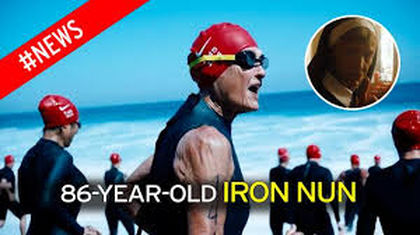
    Staying physically active is hugely important as we get older. There are plenty of examples of athletes in their 80’s who still compete at weight lifting, marathons, and even the now famous Iron Nun, (thanks Nike) Sister Madonna Buder who just finished her 46th Triathlon and who didn’t start running until she was 47! However, the body is changing and its important to know how to stay active without overloading and getting injured.

    I love to move and have been active my whole life whether it was running, cycling, yoga, dance, or walking. I feel like the same person, therefore I can still do what I did at 20, 30, 40. Right? Like running up a steep mountain trail or keeping up with the young yoga enthusiasts or perhaps even taking a Pound fitness class very close to a college campus that combines drumming with cardio and hundreds squats and plies! I humbly admit to all the above examples. I felt the tug in the hamstring but thought it was just sore and I would heal like I did with all my other intermittent sore muscles. So, I kept walking and riding my bike. I did consult with a PT but didn’t get the rest I needed. The pain didn’t go away and by the time I actually went to see a Sport’s Medicine doc, I had a small partial tear in the tendon. Ouch! Now I have time to write this blog.

    So, how to prevent this situation?The safety margin of an exercise dose tends to decline with aging, according to Kallinen and Markku in their article, Aging, Physical Activity and Sports Injuries published in the Journal of Sports Medicine. The authors state that, The best ‘treatment’ for sports-related injuries is prevention. Good agility, technical skills, and cardiovascular and musculoskeletal fitness are important in injury prevention among the elderly. (or middle age).


    Tips for Maintaining Fitness:

    • Adjust your mindset! Accept the fact that you are getting older and treat yourself with care and compassion.
    • Set goals but be realistic about your training plan.
    • Warm up your muscles before jumping into an activity.
    • Flexibility exercises are important to counteract the loss of flexibility as we age.
    • Make sure your posture is in alignment by consulting with a physical therapist or DO. Donna Byrne, a licensed Physical Therapist and owner of Pilates Central has been specially trained by the Postural Restoration Institute and incorporates these exercises into all the Pilates classes taught at her studio. Hips that are out of alignment for example, can lead to all kinds of problems that I am experiencing first hand!
    • Start slow with a new activity or even an old activity that you haven’t done in a while. Do half the usual time at first and then add 5-10 minutes the next time you do it.
    • Incorporate the 3 basics of fitness in to your weekly routine: strength training, cardiovascular training and flexibility.
    • Cross-train. Over-use injuries are common so mix up your routine but see above about starting slowly!
    • For brain/body fitness, incorporate activities that include balance, coordination and reaction time. Yoga, dance, tennis are good examples of these activities.
    • Use a foam roller to loosen up the connective tissue that tends to get less flexible with age. Maintain a healthy weight so you will have less wear and tear on your joints. Choose activities you enjoy. Nature and socializing are also good for your health. Exercise outside or with a friend or in a fun class to get twice your benefit and keep you motivated.
    • Last but not least – Don’t ignore pain – that is a signal something is off!! Listen to your body and give it the rest or the care that is needed. Hopefully, you won’t need to learn the hard way!
  • Essence Healing: Find Your Wings

    Essence Healing: Find Your Wings

    I have been privileged to work with 8 people who are participating in my Pilot Project which combines my work as a health educator/coach with the new skills and tools I have been accumulating in my studies with Chicago healer, Kurt Hill, Martha Beck, Byron Katie, Tara Brach, Dr. Keith Holden, in addition to countless books on Jungian psychology and holistic and energy healing. Some will call this line of work Somatic Psychology or Energy Healing or Energy Psychology. Kurt Hill calls it Advanced Psychosomatic Character Therapy. It uses both ancient healing methods and very modern science in psychoneuroimmunology, mind body medicine, quantum physics and vibrational medicine.

    What I have found is that profound healing is possible at any age and no matter how long you have been dealing with your “issues”. Your “issues are in your tissues” so accessing them in your body and releasing them in a very relaxed state leads to profound and what seems to be lasting shifts.

    Comments from participants include:

    • “I went from stuck to unstuck”.
    • “Feelings of anxiety and negative thought patterns I have had for years are just gone”
    • “I have recovered a sense of joy, more energy and a release of old patterns”.
    • “I feel like I have a new pair of glasses on, I am seeing a whole new world.”
    • “Ann creates space that allows the layers to emerge.”

    These are powerful statements that show results in just 6 sessions. I have learned that everything is related: your habits, your memories, the pain in your back, the negative self-talk, the inertia, insomnia, hormones, the food you eat, and on an on. These are all clues to what is holding you back from feeling your best and functioning optimally. I have learned ways of accessing and uncovering unconscious material or blocks in the form of dreams, physical symptoms, daily irritants or stressors, mental symptoms and the chakra system. I have also learned skills for transforming and using them to heal wounds from the past making room for more energy for self-healing.

    By recovering aspects of your Self that have gone into hiding, you align with your true authentic Self. That is at the heart of this process which feels like freedom in the mind body and spirit. Ready to find your wings? Stay tuned for some transformational stories next time.

  • Avoid Overindulgence With Brain Science

    Avoid Overindulgence With Brain Science

    There is difference between indulgence and overindulgence. Indulgence every once in a while is fine but too many people put on weight over the holidays that takes all year to take off, if it ever comes off. I recently went to a seminar on understanding the connection between the brain and some of our behavior around food given by Dr. William Kelley, a Professor of Psychological and Brain Science at Dartmouth College. Here’s what science tells us about why we often fail to stick to our health goals and how we can outsmart our biology to keep you on track during the holidays.

    It is important to know yourself and your usual patterns. Are you the type to have a small piece of dark chocolate and you are satisfied? Or does one bite of ice cream mean you will finish the whole carton?Yes? Read on:

    Brain Basics:

    • Habits are an automatic response that the brain has figured out to improve our well being. Habits are learned and maintained based on reward.
    • We have a Reward Center and a Control Center in our brain. The Reward center is considered bottom up because it tends to happen without our awareness. The Control center is a top down function meaning it doesn’t happen automatically and can amplify or dampen the reward center.
    • Reward pathways are created through reinforcement involving a neurotransmitter called Dopamine. You eat a cookie or get a like on Facebook and dopamine is released lighting up the reward center. If you do this often enough and especially if there are emotions involved, a new habit is formed.
    • The cookie or Facebook or a glass of wine or whatever lighting up your brain becomes a “Cue” “ meaning whenever you are exposed to the cue, your brain becomes very motivated to receive that reward. It lives for the moment without caring about long-term implications. Give it to me NOW!

    Stress and the Control Center:

    • You probably are already aware and have experienced what stress does to the Control Center “ it dampens it so it becomes a very soft voice when faced with that cookie. At the same time the Reward center amplifies so all you hear is COOKIE!
    • This applies to any reward: Pick your Poison – smoking, heroin, facebook, video games, alcohol, etc.
    • You are more likely to overeat when stressed if you are female, already overweight, sleep-deprived and on a diet.

    Brain Science tips to avoid overindulging this holiday season:

    • Avoid Cue exposure by not buying your trigger foods your higher self doesn’t want you to eat.
    • Don’t allow even one taste of the forbidden food (or one drink, one cigarette, etc.)
    • Amplify positive emotions through daily gratitude or doing a heart-centered meditation.
    • Prioritize some daily stress management technique such as doing deep inhales and exhales throughout the day. Prioritize sleep over your to-do list, which may mean simplifying.
    • Alternate alcoholic drinks with sparkling water.
    • Don’t try a restrictive diet during the holidays, it will only backfire. Fill up on eating whole foods (fruits and veggies) which will turn off your appetite and limit your exposure to triggers whether it is sugar or salty/crunchy.

    Is there a Magic Bullet that could help with all these factors that is just as effective as all of the above mentioned strategies? Yes! Mindfulness training has been shown to be very effective at regulating sleep, the stress response, overeating, smoking and drinking. Instead of trying to stop the emotions and craving, with mindfulness you learn to observe them and let them go. Yes, I really want to eat that. Yes, I am really annoyed right now. Hug your emotions and let them go, and watch yourself pass on the second helping of pumpkin pie. I am teaching an introductory course on Meditation that will cover some of the basics of Mindfulness. For more information please see the Meditation Course page under Services on my website.