Author: Ann Baker

  • You Are Probably Breathing Wrong

    You Are Probably Breathing Wrong

    Breath: The New Science of a Lost Art is a 2020 bestseller by James Nestor. This book is a fascinating and informative read and that’s from someone who has studied breathing and its connection to health for decades! We breathe 25,000 times/day and with each breath, we send signals to our body that can result in health and well-being or dis-ease.   I will do my best to summarize a few of his findings from extensive study, self-experimentation and interviews with “pulmonauts” from around the world.  (Photo credit: Max van den Oetelaar)

    How we breathe is as important as what we eat, how much we exercise, whatever genes we inherit. It’s that vital. – James Nestor

    1. Breath through your nose:  This was the biggest and most important takeaway for me. Breathing through your mouth triggers hormones that stimulate the stress response. That’s not all,  Nestor links mouth breathing to dental cavities, blood pressure, sleep apnea, and mood. The book describes how he participated in a self-experiment in collaboration with the Sinus Center at Stanford University.  He plugged his nose for 30 days and measured various markers of health. At the end of the 30 days, his health deteriorated greatly and he felt horrible. All of that reversed when he unplugged his nose. The benefits of nose breathing are related to how this kind of breathing moistens and purifies the air coming in. This leads to greater oxygenation of the blood and increase in nitric oxide which is associated with better blood circulation.  I have been trying to breath only through my nose when exercising and it has improved my recovery and also gives me more energy to exercise longer.  Try it!
    2. The book outlines many breathing techniques but he suggests the ideal breath is symmetrical – inhale to a count of 5.5 and exhale to a count of 5.5. This slows down the breath and creates a coherent rhythm in your heart.
    3. A longer exhale is relaxing!  This has been known for a long time. You can notice that when you inhale the heart speeds up a bit and slows down with the exhale. When the exhale is longer than the inhale, the parasympathetic nervous system kicks in and that calms your mind and body. This breathing creates coherence between all systems of the body. Shallow, faster breathing is linked to anxiety.
    4. You can strengthen and improve your capacity to breathe. There are exercises that will improve your lungs’ capacity. There are deep sea free-divers that can hold their breath for around 10 minutes! Over time shallow breathing decreases the range of the diaphragm and limits our lung capacity. Posture also has an effect on the use of the diaphragm, breathing and the nervous system as Donna Byrne from Pilates Central in Evanston teaches.

    The book explores many topics and varieties of breathing and I invite you to read this fascinating book to learn more. His website has breathing tutorial videos and videos from experts. https://www.mrjamesnestor.com/breath

    The breath is a common thread in what ails the earth and humans, from the fires on the West Coast to COVID-19.  Maybe what will heal both begins with the breath. With breath awareness, human beings can learn to slow down, become more present to themselves, others and the world around them.  Do yourself a favor and take a break after you read this and just take 5 slow, deep breaths, focusing on extending your exhale. Notice throughout the day, are you breathing through your mouth?  Are you breathing fast and shallow?  Slow down and breathe.

  • Why Am I Regressing?

    Why Am I Regressing?

    Literally everyone I talk to or am coaching now is really done with our current situation! It has been 6 months since the pandemic started and no end is in sight. Schools are trying to start but most have decided on e-learning from home.  Summer helped with sun and nature and seeing friends and family outside.  But the cooler and rainy weather in Chicago has reminded us how quickly the seasons change and soon we will be back inside. I have been reading a lot about resiliency and why some thrive in a crisis and others don’t.  I came across a theory by psychologist Dr. Merete Wedell-Wedellsborg that describes 3 stages of responding to a crisis that I found rang true and hope you will find it helpful as well. (Photo credit:  Dan Meyers, unsplash.com)

    when we are no longer able to change a situation, we are challenged to change ourselves. Viktor Frankl

    Stage one:  Emergency phase:  Urgency of a new situation tends to be accompanied by a surge of energy and focus. This is when we spring into action to meet the crisis. We are creative, problem solving, adapting, and surprisingly upbeat.  We can do this!  The nervous system’s flight or fight mechanism prepares us well to meet challenges, pumping energy to the muscles and our brain.


    Stage two:  Regression or Burn-out:  Months of adapting to doing everything differently have us drained and low on energy reserves.  In military terms, our surge capacity is depleted. The nervous system, having been in high alert, is taxed so we start feeling fatigued, depressed, anxious, on edge. We hit a wall yet the floodwaters can’t be held back so start feeling overwhelmed.  CDC reports that as of late June, 40% of U.S. adults reported struggles with mental health or substance use.  We look for ways to soothe, escape, and cope that are frequently from a less mature time but are things that give temporary comfort. We regress to drinking or eating too much, spending hours watching TV, not wanting to take responsibility for work or family.  What this stage is trying to tell us is that the nervous system and body urgently need time to restore and fill the reserves.


    Stage three:  Recovery phase:  Since there is no clear end to the current situation this phase now is more about learning to adapt to a less than desirable situation. We need to find ways to move out of survival mode and to find new opportunities.  One effective and important way is to find unique ways to find meaning and contribute something of value to the greater good for one’s family, work community and beyond. Like a symphony, we each play an instrument that has an important role to the sound of the whole.  It doesn’t have to be grand; what if your contribution was to be a calm, loving presence for someone in your life?  That could make a profound difference!

    We need to build our reserves to meet the ongoing challenges this time is bringing.  Fill your resiliency bank with the following ideas that don’t take much time. (Photo credit:  Damir Spanic, www.unsplash.com)

    • Expect less of yourself. Give yourself time to rest.
    • Take five: Five minutes to move your body: walk around the block between zoom calls or child care responsibilities.  Stretch your body helps to relieve stress and quiet the mind.
    • 5-4-3-2-1: Mindfulness moments: Tune into your senses by becoming aware of 5 things you can see, 4 things you can hear, 3 things you can touch, 2 things you can smell and 1 thing you can taste. This helps you connect with your body and balance your brain.
    • Gratitude: Stop right now and focus on your heart and call to mind someone or something you are grateful for. What are you grateful for about yourself? End your day with coming up with 3 things from the day that brought you joy.  What’s the silver lining in this situation?  This brings your whole system into coherence, allowing the body and mind to function optimally again.
    • Stop multi-tasking or thinking about the next thing you need to do. I know work/school/family boundaries are blurred now, but bringing your full attention to the thing you are doing now will help expend less mental energy and leave you with more at the end of the day.
    • Fully connect with someone “ a smile, a quick phone call, a hug. Savor face-face interaction as that signals our nervous system to relax.
    • Create boundaries in your home with family members. Find time to unplug and just be quiet, be it a closet, a car, a night-time or early morning walk.  Now’s the time to be creative and resourceful;  but fighting reality won’t help. It is in the quiet we hear our own inner guidance.
    • Prioritize sleep and limit screen time.
    • Plan healthy meals most of the time but enjoy a few splurges too!


    Saying Yes to situations you don’t like but can’t change builds resiliency so your next challenge will seem easier and you will handle it with grace and ease.  As Viktor Frankl said, author of Man’s Search for Meaning, when we are no longer able to change a situation, we are challenged to change ourselves. What growth opportunity is waiting to take flight in you?

  • Eye of the Storm

    Eye of the Storm

    After working with a client recently on his emotional stress reactions, he had an image of being at peace in the eye of a storm with a growing white protective bubble around him and the dark clouds receding farther and farther out. With time and practice, his intention is to make those dark clouds less dense so the space of peace expands farther and farther.

    This is a powerful image and one that came after entering the storm and discovering that by facing it with courage, presence and compassion, he was able to discover a peaceful center that was there all along. His mind and body were caught up in the whirl of the storm, however and he didn’t notice it.  The photo is taken from the eye of Hurricane Dorian. Amazing image!

    In the eye of the storm
    You remain in control
    And in the middle of the war
    You guard my soul
    You alone are the anchor
    When my sails are torn
    Your love surrounds me
    In the eye of the storm

    Lyrics by Ryan Stevenson

    Our nervous system was designed to handle occasional stressors with the fight or flight response; major threats with the freeze response. The rest of the time, our system is supposed to be in the “rest and digest or rest and repair” mode. This ensures the health of our whole system. Challenges are balanced with times of recovery.

    Lately, the challenges keep coming and we aren’t handling the stress so well with mental health issues on the rise. Our old ways of coping aren’t working or not possible.  The nervous system is calmed through supportive social connections which are not as easy to do safely now.

    So, how do we find that peaceful center?  It takes discipline and practice. Our minds are on high alert so it will be like taming a wild horse but start we must as we are in an era of great change and chaos.

    Find Your Peaceful Center:

    1. Make time to just sit with yourself and breathe.  Connecting to the breath brings the mind back in alignment with the body and spirit. The Latin term for breath is spiritus. Notice you are being breathed. Relax into that awareness of a force beyond your understanding that breathes you and keeps you alive.
    2. Connect with nature. Nature shows us that everything is in motion and change; flowers bud and then whither, fruit ripens and then turns to seed. We are part of it all and when we notice, there is beauty and joy and also the understanding that we are not in control!
    3. Connect with your loved ones, especially now when we can be outside. Be a source of support for someone with a calm voice and listening presence.
    4. Find something you are grateful for and savor it – the brain loves to stick to negative things. We have to pay attention and savor for the brain to shift to the positive.
    5. A recent survey found that 70% of participants described themselves as spiritual. Use that belief or inner knowing as a source of support now. Relax into your inner knowing of a higher power.
    6. Give yourself the gift of moments of silence. That’s where the healing happens, that’s when the insights come, that’s how Grace works its magic, subtly and sometimes dramatically letting us know All Will Be Well.


  • The Stress Hardy Personality

    The Stress Hardy Personality

    Everyone I talk to these days is tired, distracted, and anxious. There is much uncertainty in our lives and much continued disruption. The definition of stress is: A response to any pressure or demand, requiring change or adaptation. Sound familiar? These are challenging times.   “Doom scrolling” is a new term for our times when you can’t stop scrolling through your news or social media feed and just can’t pull yourself away.  Well my dear friends, that isn’t helping!  I want to introduce to you today some old research from 1979 about the Stress Hardy Personality. Like the cactus in this photo, flowering despite inhospitable conditions.

    Life isn’t about waiting for the storm to pass…it’s about learning to dance in the rain.

    Dr. Susan Kobasa and Dr. Salvote Maddi did a ground breaking study in 1979 with  the executives of the Bell Telephone Company during a major restructuring of the organization.  They were curious about why some people seem impervious to stress and even thrive and others don’t.  What they found was that those with certain personality characteristics had 50% less stress related health issues. These hardy traits, known as the 3 C’s are:

    • Challenge:  Seeing stressors as opportunities for growth and change.
    • Control:  Having an internal locus of control, in other words, not being a victim to the external circumstances of your life.
    • Commitment:  To self, others or a mission. Your purpose protects you.

    They found about 30% of the population they studied had those traits naturally. We now know that these traits can be cultivated by practicing certain “stress hardy” skills.  The brain is changeable and we can learn to choose our thoughts and responses with practice and intention.

    Practicing stress reduction and mindfulness meditation will help you to develop these stress hardy skills:

    • Learn to pause and breathe before reacting.
    • Learn to observe your thoughts and not identify with them. You don’t have to believe your thoughts!
    • Practice daily self-compassion. What we are all going through is hard. Acknowledge that give yourself a break and some gratitude for all that is going right in your life.
    • Commit to a daily meditation practice. From a place of calm stillness, ask what’s possible now?

    For more inspiration and wisdom on this topic I highly recommend the beautiful and brilliant book, Man’s Search for Meaning by Holocaust survivor Victor Frankl.

    Everything can be taken from a man but one thing: the last of the human freedoms”to choose one’s attitude in any given set of circumstances, to choose one’s own way.

  • Welcome to the Hallway

    Welcome to the Hallway

    A few years ago, I heard a talk by Ellen Debenport, author of Hell in the Hallway, Light at the Door. Her book is a guide to times of transition, ultimately reminding us that even during these difficult times, we have choices and opportunities to claim something that is authentically ours.  We may not have had any control or choice in the events or situation that thrust us into the hallway, with a door shut behind us. But here we are, in the hallway and for many, it is being experienced as hell but others are thriving and finding their way through this difficult time, regardless of circumstances.

    Another word for this is liminal space, as Richard Rohr describes it, “when you are betwixt and between, having left one room or stage of life, but not yet entered the next.”  Both authors describe this time as full of potential, a time when the patterns of old ways of doing things and being are dramatically interrupted and suspended; plucking us out of the familiar and habitual. For now we are feeling like we are suspended in mid-air; not knowing where we will land, how we will land, or what our new reality will look like. My mentor, Kurt Hill teaches his students that you have to shake someone up in order for transformation or healing to occur.  Even Einstein said, The definition of insanity is doing the same thing over and over again and expecting different results.  One could argue that humanity then is insane, doing the same things over and over ignoring the growing crisis in our environment and growing disparities that are leading to more suffering and uncertainty. We find ourselves shaken up, suddenly a global WE, without solid ground to stand on and I propose it is the greatest opportunity to shift personally and globally we have ever had.

    We find ourselves shaken up, suddenly a global WE, without solid ground to stand on and I propose it is the greatest opportunity to shift personally and globally we have ever had.

    How do we shift and find that light in the doorway?  The photo I found featured above, taken by Hugues de Buyer-Mimeure, spoke to me as a clue to the process or more of an attitude or way of navigating this time. A young girl, immersed in an adventure, following the path of paw prints laid out ahead of her. The photo is full of wonder and there is joy and freedom in her movement like she is expecting to find something wonderful even though she is following the path of a large animal which could be perceived as scary!  When faced with our day to day reality and the news feed, it seems hard to see this as a time of adventure but perhaps we can make that choice. The following are some practices I have found helpful and perhaps will be helpful for you too. Let’s follow her lead!

    • Spending time to sit with myself in silence. Call it meditation, reflection, coming into the present moment or whatever you like. But it is essential for me now to be with and observe the feelings and thoughts and body sensations that are coming up. Just noticing:  where I’m holding tension, feelings of grief or sometimes joy that need to bubble up, what thoughts and beliefs are pulling me down the rabbit hole of fear.
    • In this time of reflection, allow memories to come up of times from your past when you were also in transition, crisis or an unknown time. I was surprised to make the connection between my underlying sense of unease to a time in childhood when my father was out of a job for 9 months, with 7 young children to feed! I remember wonderful times of fun and adventure with him but also remember the stress and uncertainty. Sitting with this memory and the energetic remnants of that little girl which is still active within, helped me approach my reactions with self-compassion. 
    • Don’t create stories about the past or future that aren’t true.  It’s easy to project fears into an unknown future, grasp onto stories that are circulating as to the reason this is happening but staying grounded in what is happening NOW, is crucial. I’m trying to stay curious as a way to suspend the mind’s need for explanation and future planning;  “isn’t that interesting…”
    • In order to open to creative possibilities, I’m asking myself, what’s possible now? I’m getting that I will need to move more of my content and practice online. (obviously!) Yes, many things are no longer possible, but what is?  Don’t ask this from a place of anxiety or fear, but rather, take time to calm your nervous system, and from a still place, ask your higher self, what’s open to me now? how can I help? what needs to be expressed? what’s my priority?

    When we are present and in a state of open-hearted allowing, we can open ourselves up to our divine potential and grace will swoop in to light up and open doorways we could not have imagined.  Go towards something that gives you an internal YES!, whether that is how you do your work, or how you can be of service or creating something new, or just cooking a wonderful meal for your family or listening to someone who needs an ear. It is how we approach this time that will determine what is there when we open that door at the end of the hallway. You choose.

  • Why Are You So Tired?

    Why Are You So Tired?

    I hit a wall last night. I took a walk and when I got home I could have dropped on the couch and fallen asleep for the night, at 5pm. Maybe it was the trip to the grocery store which used to be enjoyable but now entails waiting outside until your turn, wearing a mask, wiping down the cart, etc. I am grateful for food and my health, however, it has become a stressful outing. Maybe it was the news with “I don’t know” meeting every question I have. When will it be safe to do anything?  Why do some people get symptoms and end up in the ICU and others don’t? When will the economy get back on track? I DON’T KNOW, with no clear plan or national coordinated effort in site to do the adequate testing, tracking and containment that is the ABCs of public health. Sigh, I try to focus on creating something of value, an online meditation, some new features for my website, a nice meal for my family, new garden plans. But the energy and attention are just not there. What is going on?

    When faced with major stressors, the body over time, has a harder time maintaining health thus the fatigue. Choosing some kind of routine self care is critical right now.

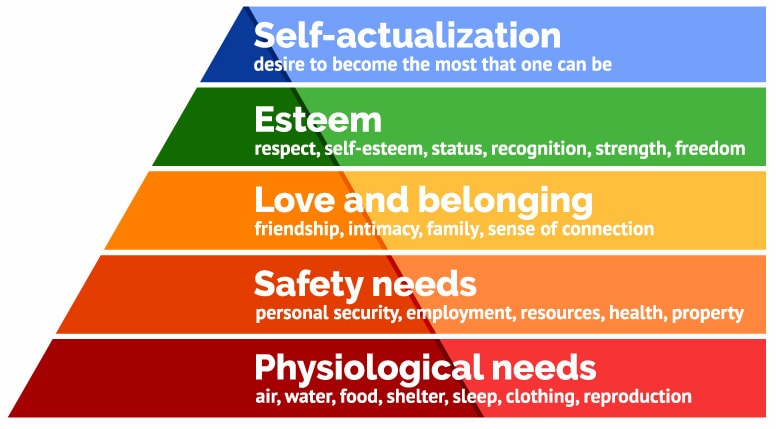
    maslow’s hierarchy of needs

    Remember Maslow’s Heirarchy of Needs?  He describes a ladder of basic, essential needs that need to be met before being able to focus on higher needs and pursuits. This pandemic has put us all at the Safety and Survival levels with a stark difference emerging between those who were living paycheck to paycheck and those with a bit of a nest egg.  I feel privileged to be able to shelter in a nice place with family I love. In reality, I am safe and secure. But many are not. My worldview has shifted to one of inter-being,  my “me” has become more of a me + we. Dr. Dan Seigel calls this recognition of our interconnectedness” m-we.” On that level, I feel the pain and fear and grief that is a palpable part of the collective. But knowing this interconnection, I also know that when I keep my peace, I am keeping the peace for all. Notice how this works in your household if you don’t believe me!

    The definition of stress is anything that requires adaptation. This pandemic has required us to adapt in every way. Major life stressors include illness, job insecurity or loss, housing insecurity or loss, relationship issues, loss of social connection and grief.   So much change in so little time! This level of change is very taxing on our nervous systems. The adrenal glands are working overtime to assist the body in maintaining some kind of normal known as homeostasis. When faced with major stressors, the body over time, has a harder time maintaining health thus the fatigue.  Choosing some kind of routine self care is critical right now.

    Nourish Yourself

    I’d like to share my approach to coping that involves the concept of nourishment and “befriending the nervous system” as Deb Dana, LCSW and Polyvagal Theory expert teaches. I ask every new client if they feel well-nourished. Most stop and pause and have to think. I always get a very honest answer. Many say no,”I know I can take better care of myself.” Many list other ways of nourishing themselves than food, such as taking a bath or reading something soul-full or spending time in nature. We are being inundated with resources, online entertainment options, work requests, family requests, and on and on. By honoring your needs and letting your nervous system guide you to make the optimal choices to nourish yourself you send the message of safety to your brain. This allows you to shift out of fight or flight and into rest and repair mode, keeping all your systems (including the immune system!) functioning optimally.

    The concept is simple and involves the following:

    • Tune into your body. It is your built in guide. How does it feel? Ask what the body needs, in this moment or maybe that day. Don’t get too far ahead. More rest, more movement, some specific food?
    • Do a simple test and feel how the words Yes and No feel in the body. No usually gets some kind of a contracting feeling. Yes is an opening.
    • Before you choose anything, even if it is something that is supposed to be good for you,  check in with yourself and see if it’s a Yes or a No.
    • If in doubt or anxious, focus your awareness on your heart and do slow deep breathing while bringing to mind something or someone you are grateful for. This aligns your mind and body and relaxes the nervous system and will allow for more clear guidance. The brain can easily become  hijacked by fear,  let the heart lead the way!

    Please see other recent posts on sleep, your stress personality and ways to relax and care for the nervous system and yourself. How will you take care of yourself today?

  • Sleep is #1 Wellness Strategy

    Sleep is #1 Wellness Strategy

    Sleep is essential for the ability of our amazing bodies to do much needed restoration and clearing. This keeps the brain, immune system, digestive track, bones and muscles all functioning optimally.  Pre-pandemic, we already had a sleep deprivation epidemic.  Add in the major life disruption, stress, added screen time and extra alcohol, I will take a guess that sleep problems will increase.

    Generally speaking, experts agree that 95 percent of adults need to sleep 7 to 9 hours each night to function optimally. 95 percent of adults who get less than 7 hours of sleep on a routine basis will experience decreased mental and physical performance. According to Harvard Medical School, The average length of time Americans spend sleeping has dropped from about nine hours a night in 1910 to about seven hours today. And according to Dr. Lawrence Epstein at Harvard Medical School, 20 percent of Americans (1 in 5) get less than six hours of sleep per night.

    Most adults should be aiming for eight hours per night. Children, teenagers, and older adults typically need even more.

    Why is sleep so important?

    There are two parts of the sleep-wake cycle.

    • The slow wave or deep sleep is when the body does its repair and restore tasks. Tissue growth and muscle and the immune system repair happen during this phase.
    • REM sleep or Rapid Eye Movement phase. REM sleep is for dreaming, re-organizing information, boosting your memory and facilitating learning and brain growth.
    • Without both phases, your body literally starts to die. Chronic sleep deprivation leads to weight gain, diabetes, high blood pressure, mental illness, increase infections and higher mortality.

    20 percent of Americans (1 in 5) get less than six hours of sleep per night.

    The Circadian Rhythm

    Here are some key points in the typical 24-hour cycle:

    • 6 A.M.       Cortisol levels increase to wake your brain and body
    • 7 A.M.       Melatonin production stops
    • 9 A.M.       Sex hormone production peaks
    • 10 A.M.     Mental alertness levels peak
    • 2:30 P.M. Best motor coordination
    • 3:30 P.M. Fastest reaction time
    • 5 P.M.       Greatest cardiovascular efficiency and muscle strength
    • 7 P.M.       Highest blood pressure and body temperature
    • 9 P.M.       Melatonin production begins to prepare the body for sleep
    • 10 P.M.     Bowel movements suppressed as the body quiets down
    • 2 A.M.      Deepest sleep
    • 4 A.M.      Lowest body temperature

    The Circadian rhythm is impacted by 3 main factors:  light, time and melatonin or the sleep hormone.

    How To Sleep Better


    • Avoid caffeine: Some people metabolize caffeine slowly so even a morning cup of coffee can affect your sleep.  A good rule if you really can’t cut caffeine is No coffee after noon.
    • Limit alcohol: Yes, it helps some fall asleep but it interferes with your deep sleep and delays the REM cycle.  It can also lead to blood sugar dip, which will wake you up.
    • Expose yourself to morning sunlight. During the winter, consider buying a sunlamp to simulate morning sunlight. http://www.sunbox.com
    • Use the bedroom for sleep and sex only. Eliminate all screens from the bedroom.
    • Set a screen (TV, computer, phone) curfew for 2 hours before you want to go to sleep. Download free software https://justgetflux.com or an app called f.lux which reduces the blue light of your screen.  Some people wear amber colored glasses while watching TV or using the computer.  Cover any digital light from alarm clocks/etc.
    • Stick to a regular schedule
    • Unwind before you go to sleep. Write down whatever is on your mind whether it is a to do list or something bothering you.  Better yet, write down 3 things you are grateful for.  Studies have shown this improves sleep.
    • Exercise during the day but not later than 2-3 hours before bedtime.
    • Stretch, do yoga or just a total body relaxation before bed to rid the body of excess stress.
    • Avoid liquids 2-3 hours before bedtime.
    • Sleep in a quiet, completely dark, cool room (64-68 degrees). Use ear plugs or white noise machines and an eye mask if needed.
    • Supplements: Melatonin is OK in low doses for short term use.  It is a hormone and supplementing can throw your internal mechanism of production out of whack.  Magnesium supplements are a good choice.  Most people don’t get enough from their diet and it is non-toxic up to 800 mg.  There is a product called Natural Calm mixed in warm water before bed.  It can have a laxative effect.  True Calm and Quietude are also supplements to consider. Please check   with your health care provider when starting any new supplements.
    • Have a tsp. of honey or a ½ banana before bed. If the liver runs out of glucose over night, you will wake up.
    • Meditate by counting your breaths to 10 and then counting backwards to one.

    Making sleep a priority now will boost your immunity, improve your mood, help you lose and maintain weight,  boost your creativity and problem solving and prevent premature aging.

    “A good laugh and a long sleep are the two best cures for anything.”  

    An Irish Proverb


  • Neuro Hacks for COVID-19 Fear

    Neuro Hacks for COVID-19 Fear

    We Are Wired For Fear

    It is hard not to get caught up in the media fear frenzy surrounding coronavirus. The oldest part of our brain that is in charge of keeping us alive is on high-alert!  Back in the day when our biggest threat was a tiger, our brain would scan our environment for signals of danger, report to our body via an interconnected messenger system how to respond – stay put, fight, run or in the worst case scenario, freeze and play dead.  Our brain is wired to fixate on the negative and potential dangers to keep us safe.

    Constantly searching for new information in the hopes of feeling some control only keeps us in this hyper-vigilant reactive response. Knowing that our immune system is directly linked to how much stress we are experiencing, it becomes actually harmful to our health to stay in the this cycle. Social distancing may be necessary to stop the spread of the virus but it is important to stay socially connected to keep your immune system working properly!

    That soothing voice, a gentle touch, gives our nervous system the cue to relax, “I am safe here.“

    How Do We Break The Cycle

    It is good news that our nervous system evolved to include the Social Engagement System.  This system is designed to evoke the feelings of safety through a calm voice, friendly, empathetic facial expressions and gestures.  Think of a mother in tuned with her child who comes for comfort after being hurt or scared.  That soothing voice, a gentle touch, gives our nervous system the cue to relax, “I am safe here.”

    The following are neuroscience based suggestions to keep you calm:

    1. Observe and notice when you get caught up in the fear frenzy. Learn what you need to do to keep yourself and loved ones healthy and then turn off the media.
    2. Tell a friend or family member about the Social Engagement System. Have a stress-free zone at home or with each other where you can give each other signals of safety – laugh, smile, talk in a calm voice. Try FaceTime or Zoom if we end up being isolated for longer periods of time. Social distancing doesn’t have to mean complete isolation. Be creative to find ways to connect. Staying calm yourself is literally contagious.
    3. Since the brain sticks to the negative, it takes conscious awareness and intention to notice and amplify the positive.  I suggest setting an alarm on your phone to take a gratitude break. This brings you into the present moment and gives your brain a task to find something positive. Better yet, share your gratitude.
    4. Savor the positive, it takes repeated focus to create new neural pathways so have something in sight that can be a reminder of what you love or are grateful for – a photo of loved ones or a favorite place, a flower, a shell from the ocean, an inspirational quote.
    5. Create a powerful healing state called coherence by doing a quick heart-centered breath technique that calls for a 4 count inhale, 6 count exhale and really feel and focus on something you love or are grateful for.  There is an app and sensor you can get named Inner Balance (Heart Math Institute) that shows you in real-time if you are in the relaxed mode of your nervous system which is call Rest and Repair or Rest and Digest by the way.
    6. Help others in need.

    We Are Also Wired for Love and Bliss

    Where do we go from here?  We approach this challenge like any other. We use that Social Engagement System to spread peace. What is the opportunity for growth and responding with love and kindness? We may get sick, we heal, we take care of others. We provide niches of safety to those who are in fear.  We count our blessings and notice the weaknesses in our country’s health care system (more of a sick care system), and our economy. We notice how we are a global community, so we heal together and solve our problems together. We are as Thich-Naht Hahn says, Inter-Being. Our nervous systems are not only wired for fear and love but also Bliss. This bliss is accessible in the silence of the heart. Dropping into this space turns on the part of our brain that gives us the feeling of oneness and being deeply held.  You won’t find that on social media. Wisdom and answers emerge from that space.  It’s already there, waiting for you to show up.

  • Yes…And: Lessons from Improv

    Yes…And: Lessons from Improv

    [vc_row][vc_column][vc_column_text]Most New Year’s messages involve inspiration to start over, set goals, and kick those bad habits once and for all! We make vision boards, come up with affirmations, and lists of good intentions.  But so often these convictions lose their steam and we end up doing the same things over and over. These habits may offer short term pleasure but no lasting relief from the dissatisfaction that fuels the need for those habits. I’ve been reading a lot about addiction and trauma lately. Addiction expert Dr. Gabor Mate teaches that addiction is not a choice anybody makes. It’s a response to emotional pain. Addiction doesn’t have to be to alcohol or drugs, it can be to TV, your phone or social media, exercise, sugar, sex, or shopping. It’s those habits we want to get control over but find we are powerless against and for example, without awareness, we realize we just binge watched 2 hours of TV instead of going to bed early or reading that stack of books by our bedside.

    We are wired from the time we are born to seek pleasure and safety and avoid pain. Our nervous system becomes trained to seek those pathways that give some kind of reward. The majority of us experienced some kind of pain or trauma in childhood. No one’s parents were perfect and no one’s life experiences are without challenges. As kids we learn what helps us avoid or numb the pain or gain approval. These become subconscious programs that become part of our default or automatic reactions. For some of us, that involved eating something sweet, or escaping into the imagination or literally running away. As adults those pathways don’t go away, we just learn grown-up ways to keep them going “ alcohol, shopping, the internet, etc.  All the resolutions, affirmations, good intentions, and vision boards won’t do any good unless we actually face the pain or discomfort we are avoiding. It is through compassionate self-awareness we can finally be with the younger self that gets triggered unconsciously and provide the love and safety we are really seeking when we turn to those addictive distractions.

    Many spiritual teachers preach acceptance of the present moment as the way to end suffering.  Here’s an example from author and speaker Eckhart Tolle:[/vc_column_text][vc_empty_space height=”35″][mkdf_blockquote text=”Always say yes to the present moment. What could be more futile, more insane, than to create inner resistance to what already is? what could be more insane than to oppose life itself, which is now and always now? Surrender to what is. Say yes to life ” and see how life suddenly starts working for you rather than against you.”][vc_empty_space height=”20″][vc_column_text]Such promise! But such a challenge to our human selves who learned to say no to things that made us uncomfortable, feel unsafe or inflicted pain at a young age and yet, I have learned that is the key to unraveling those habits that keep us in patterns of suffering.

    I have a few friends who have recently taken improv classes and shared the basic improv concept of Yes, And. This concept is the key to creating successful funny scenes where actors cooperate with each other creating possibilities that would not be possible if one of them had said No.

    From Second City: The basic concept of these two words is that you are up for anything, and will go along with whatever gets thrown your way. Essentially, you don’t use the word No in improv very often! The And part comes in when you are in a scene and can add to what your partner started rather than detract from it.

    A large part of improv is that you are always there for your scene partner or partners, and, in turn, they are always there for you. This is the goal of Yes, And! By saying yes to your scene partner, you create something much more entertaining. If you start a scene by saying that you are an alien, and your scene partner completely commits to also being an alien, being abducted by an alien, etc., both of you know you can count on the other person. On the other hand, if you start by saying you are a puppy, but your scene partner says Wait, I thought you were a cat!, the scene is compromised. Not only do you feel less confident, but also the audience is less entertained.

    I started wondering if this could this be a way to understand and live this teaching of acceptance. If life is your scene partner, (and as Shakespeare so wisely observed, that we are all actors on a stage) might it respond differently when you have the attitude of “Yes, And”? What if life is giving you exactly the experiences that you need to learn what your triggers are thus revealing the aspects of you that need to seen, heard and healed? Instead of resisting, maybe with intention and awareness we can learn to say “Yes, And.”

    Dr. Dan Siegel wrote a parenting book entitled The Yes Brain. In a lecture he instructed his listeners to close their eyes and feel the reactions in the body and state of mind when you simply respond to the words Yes or No. Remarkably, with no other word attached, my body tightened up and my mood darkened with the word no, and became relaxed and optimistic with the word yes. When you say No to life, your body, mind and spirit shut down and you are not open to possibilities that are presenting for creative problem solving and potential lessons and gifts. When you say Yes, And, you stay relaxed, flexible, curious, resilient, and willing to try new things. You remain open to yourself and others allowing for creative solutions, empathy, and the opportunity for grace to move through you. Possibilities you could not have imagined open up as you say Yes, I accept this feeling, this situation; And, I choose to remain present, and  instead of reacting automatically, respond with wisdom and compassion. Yes, And is also a wonderful communication technique that opens up conversation allowing everyone to feel heard while at the same time, contributing something new.[/vc_column_text][vc_empty_space height=”42″][vc_single_image image=”5331″ img_size=”full”][vc_empty_space height=”28″][vc_column_text]In summary, the Yes, And approach involves the following steps:

    1. Pause before indulging in your favorite bad habit.  “Yes, I want to eat this whole pint of ice cream!”
    2. Bring your awareness into your heart, in other words, approach yourself with compassion, like you were relating to a 5 year old child.
    3. Notice what you hope to gain from the habit “ be honest about what you need. Some benefits include, pleasure, escape, stress relief, connection, etc. “Yes, I need comfort.” Most of these behaviors are fine in moderation as are the rewards – it’s when you lose power over your choices that they become destructive.
    4. Ask your self what you are avoiding. Observe feelings and thoughts coming up with neutrality.
    5. Say Yes to the feelings “ allow them to bubble up. Feelings are energy that if allowed, will move through you in just a few minutes. Don’t get pulled down the river and identify with the victim role, rather, stay anchored in compassionate awareness.
    6. Ask your higher self or Spirit to show you the root cause “ is there a memory that comes up for you? Perhaps you will get an insight about a false belief you are holding onto.
    7. Be with that aspect of your small self “ that inner child, and give him/her the love and compassion and encouragement you didn’t get in the past. Yes, this happened, And I have so much love and compassion for myself.
    8. Choose another option that is healthy and aligned with your goals or intentions. Yes, I need comfort, And I have a plan for what that other option is. Maybe that’s taking a bath, doing a guided meditation, talking with a friend, seeking out a hug, having a cup of tea with a favorite blanket, etc. Bring positive emotion to the enjoying of whatever it is – that will help the brain create new circuits you will want to repeat. Visualize yourself choosing this when you are in a relaxed state such as waking up and falling asleep when the brain’s slower wavelength help to shift your patterns.
    9. Seek outside help if this becomes overwhelming for you or need help in the process.

    This is a heart-centered approach that is a form of meditation “ you are meditating yourself from a higher perspective, allowing for healing. Enjoy the fruits of this practice as you will notice the compulsions, cravings and low level dissatisfaction with your life being replaced with joy, contentment and flow. Please contact me if you are interested in experiencing and learning more about this powerful practice.[/vc_column_text][vc_empty_space][/vc_column][/vc_row][vc_row][vc_column][mkdf_blockquote text=”What I love about now, is that it is always a beginning “ Byron Katie”][/vc_column][vc_column][/vc_column][/vc_row][vc_row][vc_column][/vc_column][/vc_row]
  • One Box At A Time

    One Box At A Time

    What exactly do you do? This is a question I frequently get and have a hard time summing up in an elevator pitch kind of way.  So I would reply with something that was easy:  I’m a health coach, or I help people with their stress or I work holistically with people on their health. None of those really captured what I offer. Admittedly, I was not comfortable talking about the spiritual aspect of health: fearing I would be judged for being a bit “out there” or “woo-woo”. Brene Brown says that “courage starts with letting ourselves be seen”. So, this new website is letting myself be seen! This is what I’ve been up to for several years; learning and delving into all these aspects of health and healing which are fascinating and powerful.   I am hoping this new website gives you a better understanding of what I have to offer and why I believe this approach is so important.[vc_row][vc_column][vc_empty_space][/vc_column][/vc_row][vc_row][vc_column][mkdf_blockquote text=”New elevator pitch “ I am a mind, body, spirit practitioner offering ways to bring all three into balance. Maybe still a bit enigmatic but perhaps getting closer!”][/vc_column][/vc_row][vc_row][vc_column][vc_empty_space][/vc_column][/vc_row][vc_row][vc_column][vc_column_text]

    Creating the new website, which is a better fit for my work, coincided with downsizing and moving into a home that is better suited to our current status as empty nesters. It involved getting very clear on what to keep and what to bring with us. What we were ready to let go of and what we were choosing to bring into the space that we live?  The process was difficult and at the same time joy-filled as each closet, box, and drawer became a memory box to sort through. Our new space is uncluttered, open, light filled.  It is peaceful and an easy place to live.

    My process working with people is similar.  What needs to go and what needs to come in for you to align with your highest potential; potential for health, peace, happiness.  We approached our household objects in categories:  clothes, books, furniture, artwork, photos, memorabilia, etc. Literally each object considered for usefulness, attachment (love or joy), and does it fit with our new desire to be free of stuff?  Slow at first as everything seemed precious but as time went on, it became pretty easy to toss the majority of our stuff in the sell, trash or recycle categories!

    Approaching your whole health is similar.  Using the categories of mind, body and spirit, we can consider what are in those boxes:

    • Mind:   What thoughts, beliefs, old patterns, old hurts, out-dated ways of viewing yourself are blocking your potential or creating stress?
    • Body:  What is the body trying to tell you through your current experience?  What kinds of lifestyle choices need to be added or let go of to care for your body? What stressors or old traumas need to be addressed and let go of?
    • Spirit:  What is your relationship with Spirit? What kind of concept of God or a higher power do you have and does that fit with your inner wisdom or experience or is it something you were handed to as a child? What kinds of approaches might allow you to open to actually experiencing yourself as Spirit, connected to your Source in everything you encounter?

    Nothing happens in isolation.  Everything is connected to everything! Like with my move, our attachments can be hard to let go of at first. But, shining a light in just one area will help to bring much into focus and balance which frees up energy. I think I needed to go through all my stuff and let go of a lot (not just the things) to gain some clarity in order to do the new website. I’m excited to share all that I have learned over the years as my journey kept me curious to keep learning“ how can I heal my own body? how can I find my center? And now lately “ how to live from the True Self?  It doesn’t happen all at once, but rather similar to moving from my big, old house, one box at a time.

    [/vc_column_text][/vc_column][/vc_row][vc_row][vc_column][/vc_column][/vc_row]

  • Breast CA: Choices that Minimize Risk and Maximize Health

    Breast CA: Choices that Minimize Risk and Maximize Health

    A Whole Person Health model is helpful to use to guide your decisions that will maximize your health and wellness. Whole Health© uses 5 aspects to address the whole person as mind, body and spirit are interconnected and function as one. The 5 aspects include Physical, Emotional, Nutrition, Environment, and Spiritual. By understanding how these 5 aspects impact your health, well-being, purpose, happiness and longevity, you can choose the best sustainable health behaviors and lifestyle choices.This essay will give a brief overview of the 5 aspects as related to breast cancer prevention and recovery.

    Physical: This aspect includes the body and all the systems. The hormonal and immune systems are relevant to recovery and prevention. The immune system is all throughout the body including the digestive track. Any kind of physical or emotional stress compromises the immune system and thus, your body’s ability to fight cancer cells. Be sure to get adequate sleep (7-8hrs), have a daily practice of ridding the body/mind of emotional stressors and make sure to get adequate protein, cholesterol, B vitamins, and vitamins D, E and A as according to the grandfather of stress, Hans Selye, these nutrients are depleted during stress.

    Nutrition: Eating a whole foods diet that emphasizes fruits and vegetables from all the colors of the rainbow maximizes the cancer fighting nutrients in plants. Avoiding sugar and refined carbohydrates is important as research studies dating back to 2004 and as recently as 2014, found that foods with a high glycemic index accelerate the growth of breast tumors and cancerous cells in the body. One study found that breast cancer risk doubles with high carb intake. Avoid over processed and cooked foods that don’t give our cells the information and nutrients it needs.

    Environmental: Avoiding estrogen mimics that could raise estrogen levels is important. Avoid BPA in plastics, canned foods and receipts. Limit or cut caffeine and alcohol, which can raise estrogen. Eat less red meat and dairy from conventionally raised animals. Eating more fiber helps to rid the body of excess estrogen.

    Emotional: Emotions that are not expressed and stored in the body can limit the body’s ability to heal and/or maintain health. Feel your feelings, and then allow them to be heard, and watch as they slowly release. Be gentle on yourself and focus on self-care and self-love. If you have been diagnosed or are recovering and are local to the Chicago area, The Licorice Project is a wonderful resource of information and support. http://www.thelicoriceproject.com

    Spiritual: A cancer diagnosis or risk brings up thoughts on the essential questions in life: Why am I here? Where will I go when I am gone? Perhaps you are reevaluating how you want to spend your time. Living your truth is essential for recovery and prevention. What are you passionate about? What do you need to let go of? It is also important if you are diagnosed and faced with a myriad of decisions to use this process as a way to get in touch with your needs and wants and not get persuaded into treatments that are based on fear or what everyone else is doing. Prioritize this aspect as it lays the foundation of your health.

    Please contact me if you are interested in more information or guidance on how to integrate these ideas into your life.* â„¢©Whole Health Education and Coaching is a Trademark of the National Institute of Whole Health * â„¢© The five aspects of Whole Health is a copyright and trademark of the National Institute of Whole Health.

  • Is Healing Autoimmune Disease Possible?

    Is Healing Autoimmune Disease Possible?

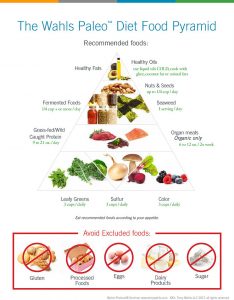
    A few weeks ago I was able to thank a personal hero of mine in person and share a meal at Kitchfix in Chicago with many other inspiring people who have also used lifestyle changes to heal themselves. Dr. Terri Wahls is a clinical professor of medicine at the University of Iowa where she teaches residents and sees patients in a traumatic brain injury clinic and conducts clinical trials. She is also a patient with progressive multiple sclerosis who was confined to a tilt-recline wheelchair for four years. She was compelled to discover answers for what was causing her disability. Her research led her to discover the Wahls Protocol, which she developed and tested on herself. She is riding her bike to work now as the first person to reverse the symptoms and disability of this disease. She shared her research with us and we were astounded to see videos of people able to walk unassisted, even jumping!

    About 6 years ago, she wrote an essay published in the Journal of the American Medical Association that described the protocol and her recovery. At the time I was experiencing symptoms and heading to a likely diagnosis of my 3rd autoimmune disease, Sjogren’s Syndrome. Conventional doctors had no answers for me beyond treating symptoms, which were related to the drying of all the mucous membranes of my body. I was extremely motivated to find something that would halt this. My husband who is a physician shared the article and suggested doing whatever she did. That began my deep dive into healing myself. It began with intensive nutrition, which included an elimination diet to discover what foods were harming by body and what foods would heal my body. The Wahls Protocol also includes stress reduction and meditation, and neuromuscular stimulation specific to MS. (which I did not do) I went further and discovered many limiting beliefs, old emotions, toxic thought patterns and a disconnect with my core Self that created the patterns that led to the dis-ease in the first place. This process takes time and attention and I am happy to report that I am fully recovered with no signs of Sjogren’s and am continuing to decrease medication for Hashimoto’s Thyroiditis, which means my thyroid gland is continuing to recover function.

    Over a delicious multiple course gourmet Wahls-approved meal prepared by the chef at Kitchfix, we heard many other stories of recovery but most importantly everyone who is using this approach repeatedly talked about quality of life improvements. They felt better, they were more relaxed, they were hopeful and happier. Any change in lifestyle takes work, discipline and practice but the rewards are astounding. Over the years of working with people who have a range of physical, mental and emotional symptoms, I have witnessed remarkable recoveries and shifts by aligning the body, mind and spirit to its true nature. What do you need to get rid of to heal and what do you need more of to not only heal but also recover your vitality and love of life? So, the answer is YES, healing autoimmune disease and many other illnesses are not only possible, but may be your road to rediscovering yourself in a whole new light. Resources: Dr. Terry Wahls: https://terrywahls.comKitchfix: Delicious healthy prepared foods delivered: https://www.kitchfix.comEmail me at ann@annpetrusbaker.com to schedule a free 20 minute consult to today!